


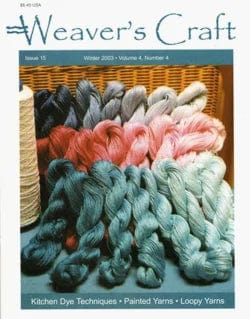
Product Details
Craft Weaving
Each issue provides in-depth information on a weaving-related topic, as well as several projects.
From the publisher's website:
I confess: traditional methods of dyeing based on industrial methods cause my head to go to sleep. I am more at ease with simplified kitchen methods and common sense with a simple method that I can repeat easily from my notes. A good dye to start with is MX-fiber reactive dye for cotton (and other cellulose-type fibers). This method involves soaking small skeins of yarn in a dye activator, dyeing with small amounts of dye in clear plastic drinking cups, and placing the skeins in plastic sandwich bags to set the dye. Also shown is a simple way to get eight shades of the same color, from dark to light.
Also included:
- Painting yarns
- Winding yarn on a niddy noddy
- Dyeing with Kool-Aid
Return Details
Weaver's Craft Issue 15: Kitchen Dye Techniques
Product Details
Craft Weaving
Each issue provides in-depth information on a weaving-related topic, as well as several projects.
From the publisher's website:
I confess: traditional methods of dyeing based on industrial methods cause my head to go to sleep. I am more at ease with simplified kitchen methods and common sense with a simple method that I can repeat easily from my notes. A good dye to start with is MX-fiber reactive dye for cotton (and other cellulose-type fibers). This method involves soaking small skeins of yarn in a dye activator, dyeing with small amounts of dye in clear plastic drinking cups, and placing the skeins in plastic sandwich bags to set the dye. Also shown is a simple way to get eight shades of the same color, from dark to light.
Also included:
- Painting yarns
- Winding yarn on a niddy noddy
- Dyeing with Kool-Aid
Return Details
Choose options


